
Beyond Language: The International Wedding Planner’s Guide to Building Trust Across Distance

Planning a wedding has always been about relationships. But when your clients live thousands of miles away, operate in different time zones, and come from different cultural backgrounds, communication becomes just as important as design, logistics, and execution.
For destination and international wedding professionals, success is no longer measured solely by beautiful venues, flawless timelines, or unforgettable celebrations. Increasingly, it is defined by how confidently couples can navigate the planning journey from afar.
When clients entrust you with one of the most important days of their lives from across the globe, distance can easily create uncertainty. The most successful planners bridge that gap by building trust intentionally through every interaction.
Here are six communication strategies that help transform long-distance planning into a seamless and reassuring experience.
1. Establish Clear Expectations From Day One
One of the biggest sources of stress for international couples is uncertainty.
How quickly should they expect a response? Which communication channel should they use? What happens if an urgent issue arises?
The solution is simple: create clarity from the beginning.
A brief Communication Guide during onboarding can outline:
- Preferred communication channels for different types of discussions
- Expected response times
- Meeting schedules and availability
- Emergency contact procedures
When expectations are clearly defined, couples spend less time worrying and more time enjoying the planning process.
Clarity creates confidence. The more predictable your communication is, the smaller the distance feels.
2. Respect Time Zones Without Letting Them Slow Progress
International weddings often involve couples, planners, venues, and vendors spread across multiple countries. Without a structured approach, even simple decisions can take days.
Rather than relying on endless back-and-forth messages, establish a communication rhythm:
- Schedule recurring planning meetings in advance
- Share meeting agendas beforehand
- Send concise written summaries afterward
- Clearly outline action items and deadlines
This approach keeps momentum moving forward while minimizing confusion and unnecessary follow-ups.

3. Lead With Cultural Curiosity, Not Assumptions
Language is only one part of communication.
Family dynamics, wedding traditions, decision-making styles, and guest expectations can vary dramatically from one culture to another. The most effective planners approach every couple with genuine curiosity rather than assumptions.
Early conversations might include questions such as:
- “Are there any cultural traditions you would like to incorporate?”
- “Who will be involved in major wedding decisions?”
- “Are there family expectations we should consider during planning?”
These conversations often reveal insights that shape a more meaningful and personalized celebration.
When couples feel understood, trust naturally follows.
4. Turn Complex Information Into Shared Visuals
Destination weddings often involve vendor contracts, travel logistics, payment schedules, guest management, and legal requirements. Presenting all of that information through long email threads can quickly become overwhelming.
Strong planners simplify complexity.
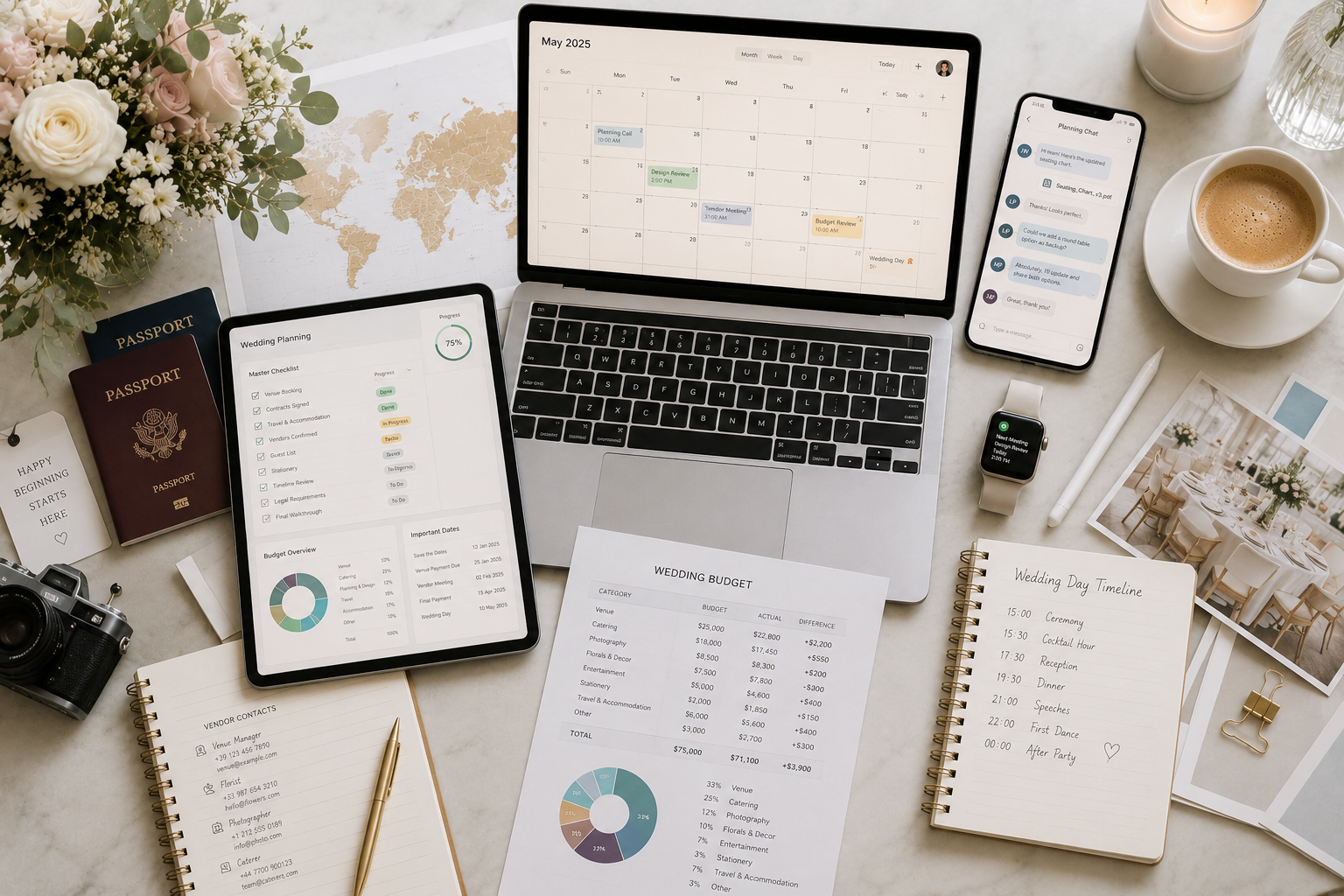
Shared timelines, visual checklists, collaborative planning boards, and centralized project dashboards allow couples to understand progress at a glance. Instead of searching through dozens of emails, they always know where things stand.
The easier information is to understand, the more confident clients feel throughout the process.

5. Practice Radical Transparency
Trust is the most valuable currency in destination wedding planning.
Because couples cannot easily visit venues, meet vendors, or attend every planning appointment in person, they depend on your expertise and honesty.
That means communicating openly about:
- Budget realities
- Vendor limitations
- Timeline challenges
- Potential risks and solutions
Transparency does not weaken confidence—it strengthens it.
A planner who says, “We may encounter a challenge here, but we already have a solution,” often earns more trust than one who tries to present every detail as perfect.
6. Use Technology as a Relationship Builder
Technology has transformed the way international weddings are planned. Video calls, collaborative workspaces, digital timelines, and shared planning tools make cross-border coordination easier than ever.
However, technology should support relationships, not replace them.
The most memorable client experiences still include personal touches:
- A quick video message celebrating a major milestone
- A thoughtful voice note after an important decision
- A personal check-in before the wedding weekend begins
These moments remind couples that behind every dashboard and timeline is a real person invested in their celebration.
Final Thoughts: Trust Is the Real Deliverable
Beautiful weddings are remembered for their atmosphere, emotion, and experience. But behind every successful international celebration is something less visible: trust.
Couples may not remember every planning meeting or every email exchange. What they will remember is how supported they felt throughout the journey.
When planners combine clear communication, cultural awareness, transparency, and thoughtful use of technology, distance stops being an obstacle. Instead, it becomes simply another detail in a well-planned experience.
And that is what exceptional international wedding planning is ultimately about—not just coordinating a wedding across borders, but creating confidence every step of the way.